Trendline Support and Resistance Fails? Here’s the Truth Nobody Tells You
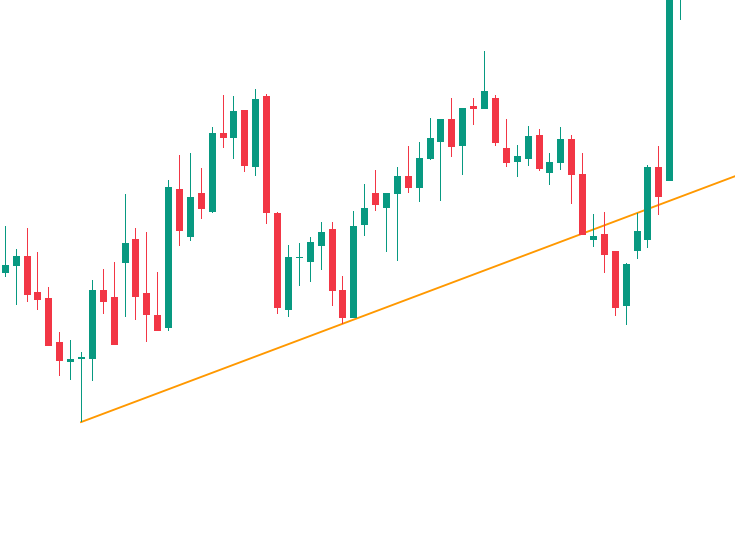
Why Trendline S&R Fails
You draw a trendline. Price touches it. You take the trade. Price breaks it. Stop loss hit. Market reverses back. You sit there thinking — “Is this whole concept a scam?”
Every trader goes through this. Me too. But the problem is not trendline. The problem is how you use it.
The Classic Trap:
Price breaks below the trendline and closes there. Most people think “downtrend has started.” They start shorting. Makes sense, right?
Then the market does what it does best — hunts stop losses. Price comes back up. Takes support where it shouldn’t. The breakdown failed. But by then, your short position is already underwater.
Sound familiar?
What a Trendline Actually Is:
A trendline is nothing more than two pivot points connected by a line. Point 1 to Point 2. Extended to the right. That’s it.
But here is where the problem starts.
Once we draw that line, our brain creates a bias. If price touches the line, we buy. If price breaks the line, we sell. Simple rules. Simple mind. Easy to manipulate.
The market knows this. Big players know this. And they use it.
Let Me Share Another Example:
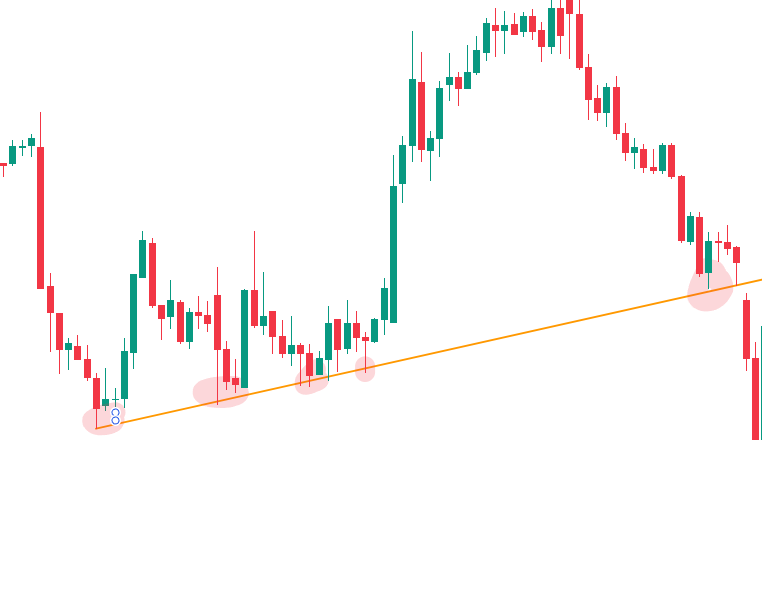
Price comes to the trendline. Takes support. Forms a nice bullish candle. Looks clean, looks textbook. Traders jump in. Positions build up. Confidence is high.
Then the big players step in. Price reverses. The bullish candle becomes a trap. Stops get hunted. Late buyers panic. Early sellers grin.
You see the game now?
The Real Problem Is Inside Your Head:
Look at the example again. A bullish candle forms at support. Many traders jump in. Even if you tell yourself “this candle is not that strong,” your brain has already made up its mind.
The bias was set the moment you drew the trendline.
During live market hours, changing that bias instantly is extremely difficult. Very few traders can do it. The ones who can? They are the successful ones.
Because the number one trading tool is not an indicator. It’s your ability to change your behavior and bias as the market changes.
How to Use Trendline as a Winning Tool (Even When Everything Fails)
Now let’s flip the script.
Most traders treat a trendline like a buy or sell button. Don’t do that.
Treat a trendline as a “zone of interest.” It tells you something might happen here. Not will happen. Might. Then you wait for the market to show its hand first. Then you act.
Here is a simple 5-step method to use trendlines properly.
Step 1: Draw Clean Trendlines
Connect two clear pivot points. Extend the line to the right. Make sure the line does not cut through any candle body. If it slices through candles, it’s drawn wrong. Redraw it.
A clean line respects price structure. A messy line creates messy decisions.
Step 2: Check Pivot Levels Near the Trendline
When price approaches the trendline, don’t just stare at the line. Look left.
Has price already broken a nearby pivot low? If yes, the trendline support is weaker. Ignore that setup. Wait for the next one.
If pivots are intact, the trendline has strength. Pay attention.
Step 3: Let Price Touch and React
Price touches the trendline. Now wait. Don’t jump.
Let the candles form. Let price react however it wants to react. Up, down, sideways — doesn’t matter yet. You are watching, not trading.
Step 4: Wait for 3-4 Candles to Close
This is the patience part. Let 3 to 4 candles fully close on whatever timeframe you are using.
Why? Because the first candle after a touch can be emotional. The second candle might be confusion. By the third or fourth candle, the market’s real intention starts showing.
Now you have information. Now you can think.
Step 5: The Golden Rule Most Traders Miss
Here is the most important rule I follow.
If price goes below the previous pivot low — but does NOT close below the trendline pivot low — there is a very high probability the market will take support at that level.
Read that again. It’s the difference between getting trapped and catching the right move.
The wick can dip lower. The body matters. Watch the close.
Final Words:
A trendline is just a tool. It is not a strategy. Drawing a line and blindly taking trades will never make you profitable.
Confluence makes you profitable. Patience makes you profitable. Experience makes you profitable.
Screen time matters more than indicator knowledge. Spend hours watching how price behaves near trendlines. After 1000 hours, you won’t need anyone’s advice. You will feel the setup in your gut.
That’s when you become consistently profitable.